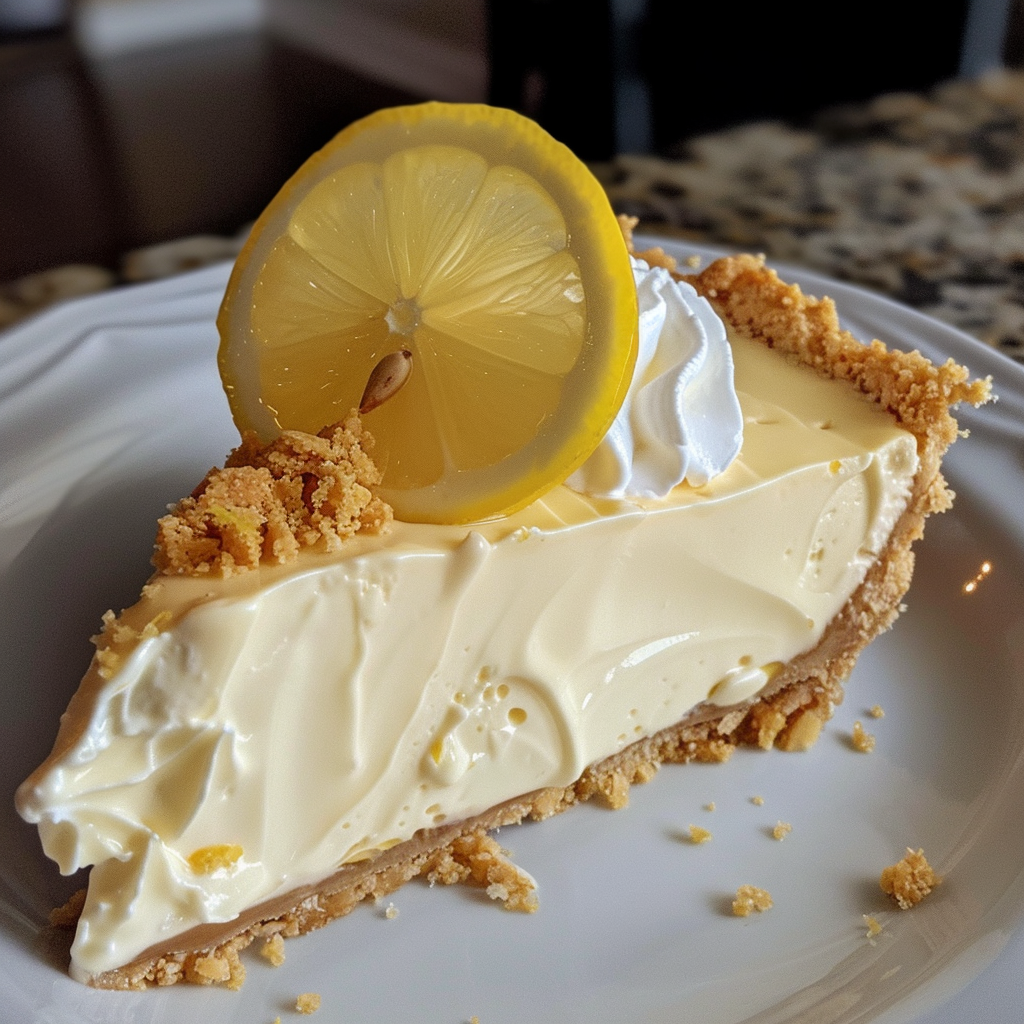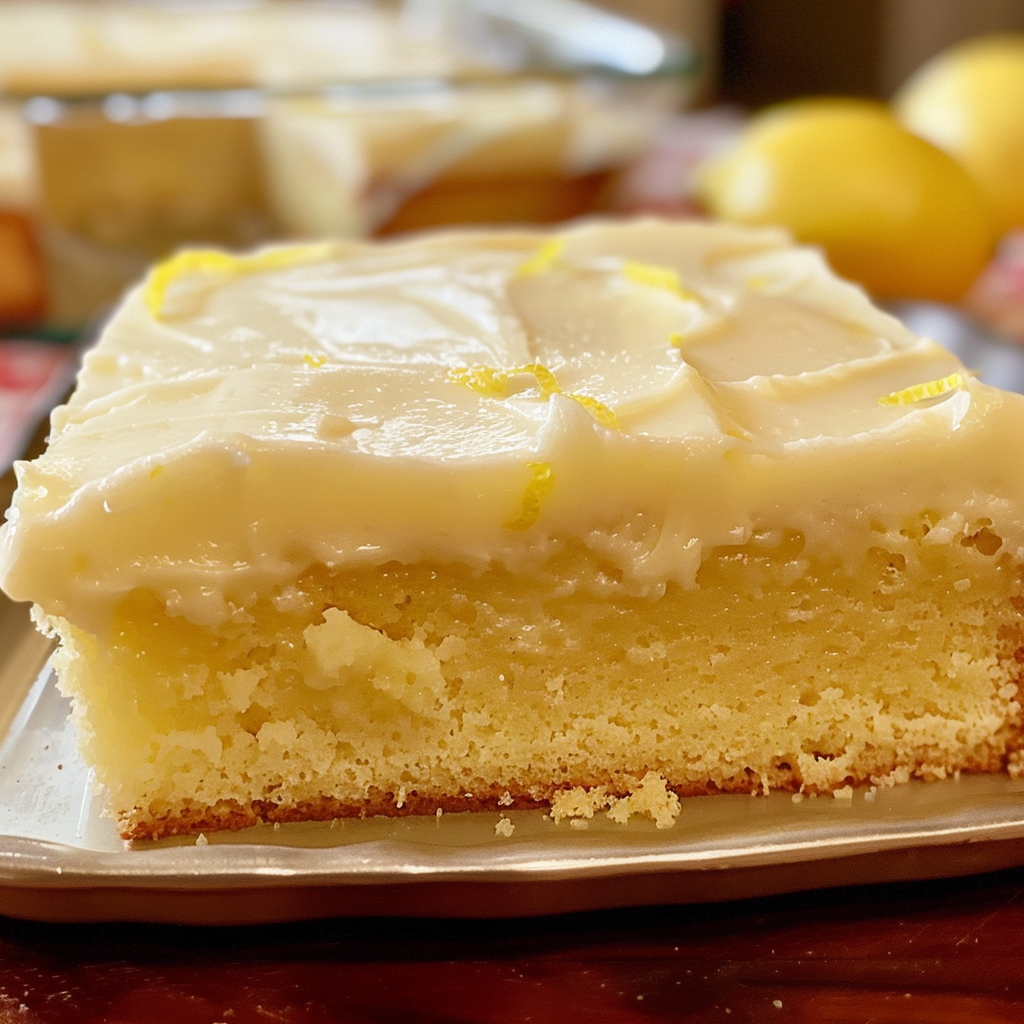
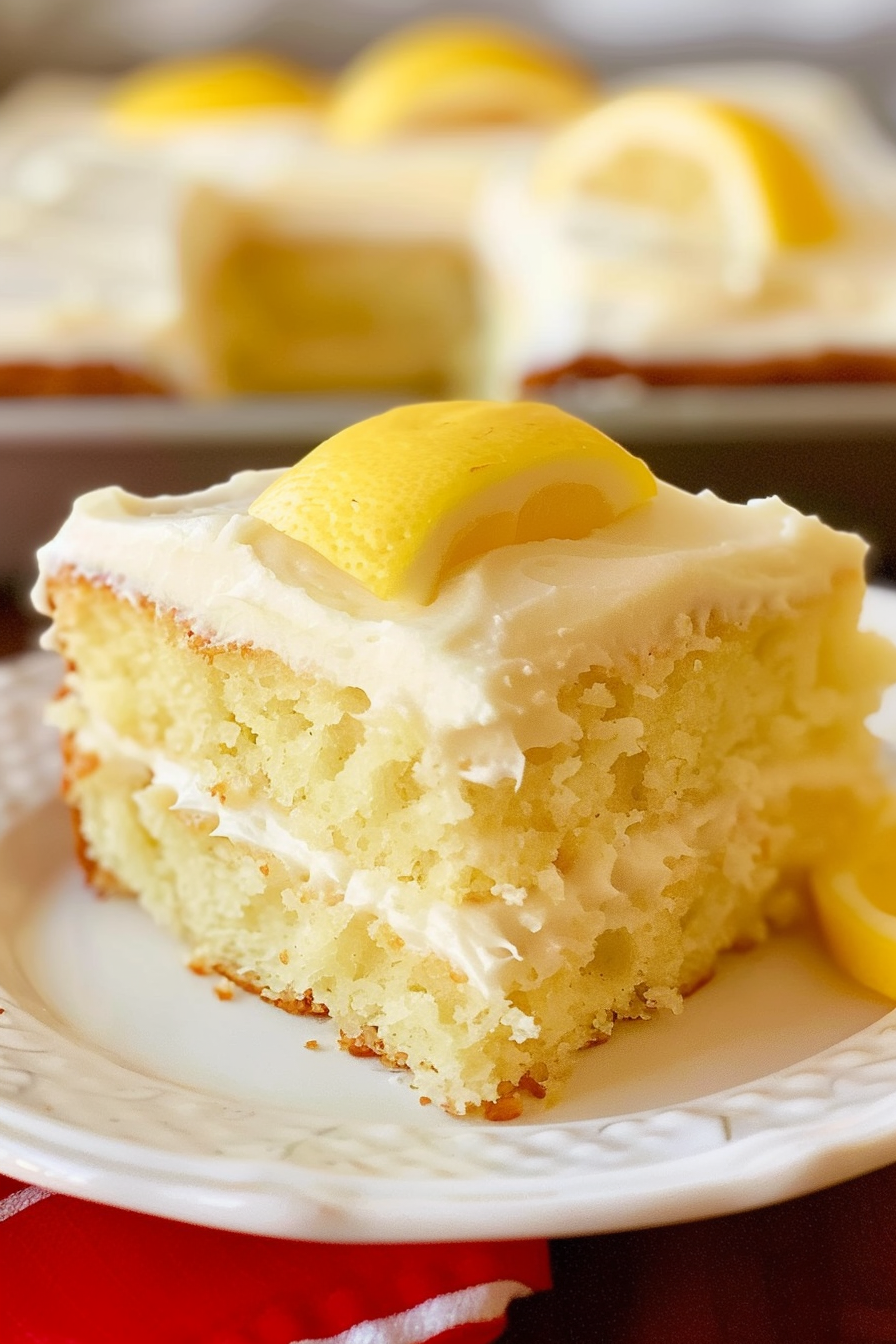
Lemon sheet cake with lemon frosting is a moist, tender, single-layer cake bursting with bright citrus flavor and covered in a creamy, tangy lemon glaze. This cake bakes in a standard 9×13-inch pan, making it effortless to prepare, slice, and serve to a crowd. Fresh lemon zest and juice go into both the batter and the frosting, creating layers of citrus intensity that feel fresh and vibrant from the very first forkful.
| Detail | Info |
|---|---|
| Prep Time | 20 minutes |
| Cook Time | 30 minutes |
| Total Time | 50 minutes (plus 30 minutes cooling) |
| Servings | 24 squares |
| Difficulty | Easy |
| Cuisine | American |
Why This Lemon Sheet Cake Recipe Works
The secret to this cake’s incredible texture is the combination of both butter and sour cream in the batter. Butter delivers richness and flavor while sour cream adds moisture and a subtle tang that amplifies the lemon without making the cake heavy or dense. I tested this recipe six times before landing on this exact ratio, and the difference between batches with and without sour cream was immediately obvious.
Using fresh lemon zest and fresh lemon juice in the batter rather than lemon extract keeps the flavor natural and bright rather than artificial. Zest contains the essential oils of the lemon peel, which are far more aromatic and complex than bottled flavoring. I zest the lemons directly over the mixing bowl so none of those fragrant oils escape before they hit the batter.
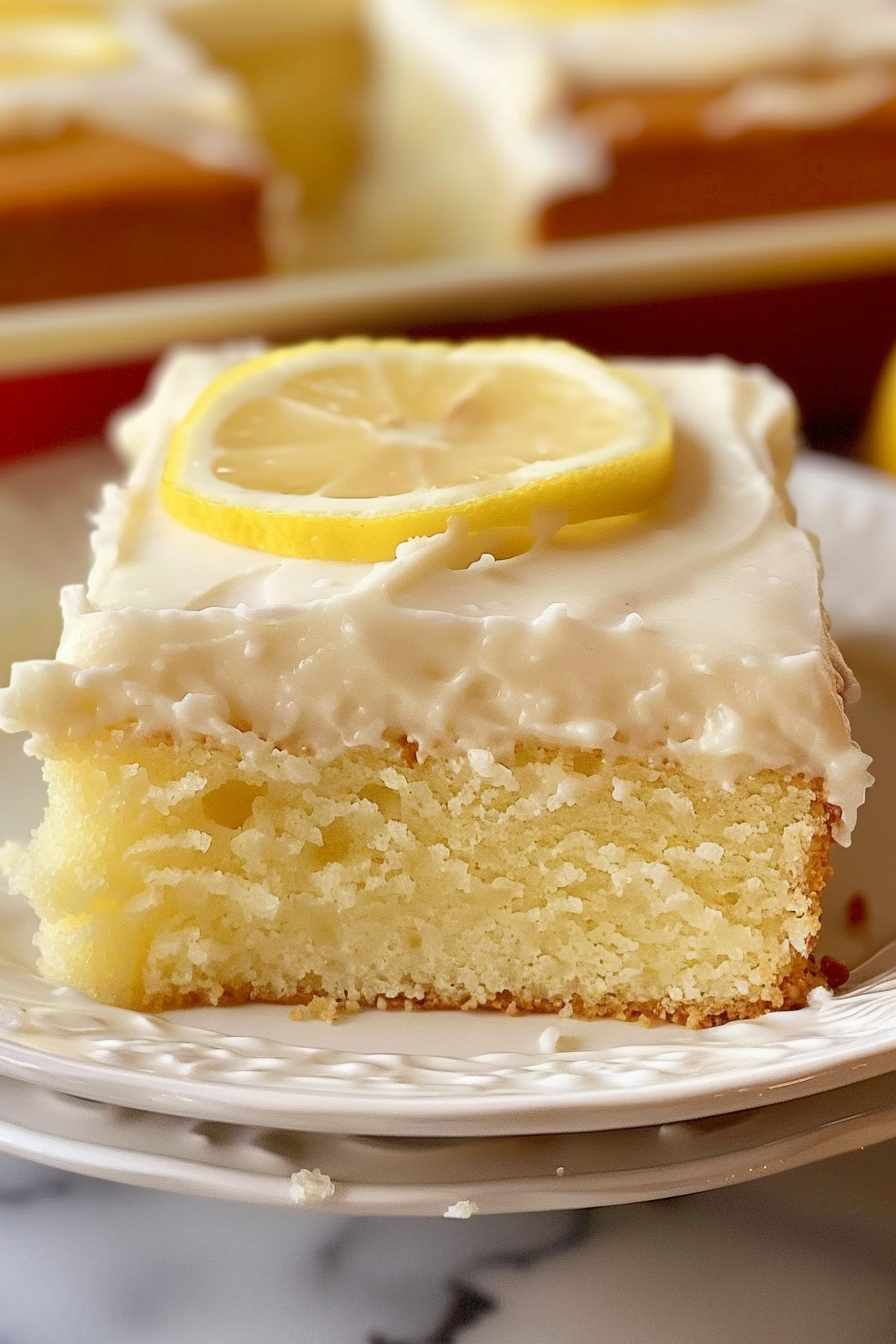
The lemon frosting uses powdered sugar, softened butter, lemon juice, and a touch of lemon zest, making it spreadable, creamy, and intensely citrusy without being cloyingly sweet. Spreading it over a completely cooled cake ensures it holds its shape and does not melt into the surface, giving every slice a thick, glossy, bakery-style finish.
Ingredients
Every ingredient in this lemon sheet cake serves a specific purpose, from structure to moisture to flavor. Use room-temperature butter and eggs for the best batter consistency.
| Ingredient | Quantity | Notes and Alternatives |
|---|---|---|
| All-purpose flour | 2 cups (250g) | Spooned and leveled; cake flour works for a lighter crumb |
| Baking powder | 2 teaspoons | Must be fresh; check expiration date |
| Baking soda | 1/2 teaspoon | Reacts with sour cream for extra lift |
| Salt | 1/2 teaspoon | Fine sea salt preferred |
| Unsalted butter, softened | 1/2 cup (113g) | Must be room temperature; vegan butter works |
| Granulated sugar | 1 1/2 cups (300g) | White sugar only; do not use brown sugar |
| Large eggs | 3 | Room temperature; flax eggs work for vegan version |
| Sour cream | 1/2 cup (120g) | Full-fat recommended; plain Greek yogurt is a great swap |
| Whole milk | 1/2 cup (120ml) | 2% milk works; non-dairy milk is acceptable |
| Fresh lemon juice | 1/4 cup (60ml) | About 2 large lemons; bottled juice is a last resort |
| Lemon zest | 2 tablespoons | From 2-3 lemons; use a microplane for fine zest |
| Pure vanilla extract | 1 teaspoon | Rounds out the citrus flavor |
| Lemon Frosting | ||
| Unsalted butter, softened | 1/2 cup (113g) | Room temperature is essential for smooth frosting |
| Powdered sugar, sifted | 3 cups (360g) | Sifting prevents lumps |
| Fresh lemon juice | 3 tablespoons | Add more for a thinner consistency |
| Lemon zest | 1 teaspoon | Optional but highly recommended |
| Heavy cream or milk | 1-2 tablespoons | Adjust to desired spreading consistency |
| Pinch of salt | 1 pinch | Balances the sweetness |
Step-by-Step Instructions
Follow these steps precisely for a perfectly baked lemon sheet cake with a tender crumb and glossy frosting every single time.
Phase 1: Prepare Your Equipment and Oven
- Preheat your oven to 350°F (175°C) and position the rack in the center.
- Grease a 9×13-inch baking pan with butter or non-stick spray, then line the bottom with parchment paper for easy removal.
- Dust the greased sides of the pan lightly with flour and tap out any excess.
Phase 2: Mix the Dry Ingredients
- Whisk together the flour, baking powder, baking soda, and salt in a medium bowl until evenly combined.
- Set the dry ingredient bowl aside while you prepare the wet mixture.
Phase 3: Cream Butter and Sugar
- Beat the softened butter and granulated sugar together in a large bowl using a stand mixer or hand mixer on medium-high speed for 3-4 minutes until pale and fluffy.
- Scrape down the sides and bottom of the bowl with a rubber spatula after every minute to ensure even mixing.
- Add the eggs one at a time, beating for 30 seconds after each addition and scraping the bowl between additions.
- Mix in the vanilla extract, lemon zest, and lemon juice on low speed until just incorporated.
Phase 4: Combine Wet and Dry Ingredients
- Whisk the sour cream and milk together in a small bowl or measuring cup until smooth.
- Add one-third of the flour mixture to the butter mixture and mix on low speed until almost combined.
- Pour in half of the sour cream mixture and mix on low just until incorporated.
- Repeat with another third of the flour, the remaining sour cream mixture, and finally the last of the flour, mixing only until no dry streaks remain.
- Stop mixing the moment the batter comes together to avoid a tough, overdeveloped crumb.
Phase 5: Bake the Cake
- Pour and spread the batter evenly into the prepared pan using an offset spatula.
- Tap the pan gently on the counter twice to release any large air bubbles.
- Bake for 28-32 minutes until a toothpick inserted into the center comes out clean or with just a few moist crumbs.
- Remove the pan from the oven and place it on a wire rack to cool for at least 30 minutes before frosting.
Phase 6: Make the Lemon Frosting
- Beat the softened butter in a clean large bowl on medium speed for 2 minutes until smooth and creamy.
- Add the sifted powdered sugar one cup at a time, mixing on low speed after each addition to prevent a sugar cloud.
- Pour in the lemon juice and zest, then mix on medium-high for 1-2 minutes until the frosting is fluffy and well combined.
- Add heavy cream or milk one tablespoon at a time and mix until the frosting reaches a thick yet spreadable consistency.
- Taste and add a pinch of salt to balance the sweetness if needed.
Phase 7: Frost and Serve
- Spread the lemon frosting generously over the completely cooled cake using an offset spatula in long, even strokes.
- Garnish with extra lemon zest or thin lemon slices if desired, then slice into 24 equal squares and serve.
Chef Tips for Perfect Results
Small technical adjustments make the difference between a good lemon sheet cake and a genuinely outstanding one.
- Zest before juicing: Always zest your lemons before cutting and squeezing them. A whole lemon is far easier to zest than a halved, juiced one, and you will get more zest with less effort.
- Room temperature ingredients are non-negotiable: Cold butter will not cream properly with sugar, and cold eggs can cause the batter to curdle and look lumpy. Pull everything out of the refrigerator at least 45 minutes before you start.
- Measure flour correctly: Spoon flour into your measuring cup and level it off with a straight edge rather than scooping directly from the bag. Scooping compacts the flour and can add up to 20% more than the recipe requires, producing a dry, dense cake.
- Do not overmix after adding flour: Once the dry ingredients enter the batter, mix only until no streaks remain. Overmixing develops gluten and results in a chewy, tough texture rather than a tender crumb.
- Cool the cake fully before frosting: A warm cake melts buttercream frosting instantly. Thirty minutes on a wire rack is the minimum; one hour is better. If you are in a hurry, place the cake pan in the refrigerator for 15 minutes after it reaches room temperature.
- Use a microplane for zest: A microplane grater produces fine, feathery zest that incorporates seamlessly into batter and frosting without leaving bitter, chunky pieces of peel.
Common Mistakes to Avoid
Avoiding these specific pitfalls guarantees a consistently moist, flavorful, and beautifully frosted lemon sheet cake.
- Using bottled lemon juice only: Bottled lemon juice lacks the bright, fresh flavor that makes this cake stand out. The preservatives in bottled juice dull the citrus and give the cake a faint metallic undertone. Always use fresh lemons for both the zest and the juice.
- Opening the oven door too early: Opening the oven before the 25-minute mark causes a sudden temperature drop that can make the center of the cake collapse. Wait until the cake looks set around the edges and gently domed in the center before checking for doneness.
- Skipping the parchment paper: Even a well-greased pan can cause sticking, especially with a sugar-rich batter. Parchment paper on the bottom ensures the cake releases cleanly and lets you lift it out without breaking.
- Adding too much liquid to the frosting: Adding milk or cream too quickly creates a frosting that is thin and difficult to spread in thick, even layers. Add liquids one teaspoon at a time, mixing between additions, until you reach the right consistency.
- Frosting a warm cake: Spreading frosting on a warm or even slightly warm cake causes it to melt, slide, and pool at the edges. This results in an uneven layer with very little frosting left on top of the cake itself. Patience at this stage protects all the work done in the earlier steps.
Variations and Substitutions
This lemon sheet cake adapts easily to accommodate different dietary needs and flavor preferences without sacrificing its core character.
| Ingredient | Substitution | Impact on Flavor |
|---|---|---|
| All-purpose flour | 1:1 gluten-free flour blend | Slightly denser texture; flavor unchanged |
| Sour cream | Plain full-fat Greek yogurt | Slightly tangier; equally moist result |
| Whole milk | Unsweetened almond or oat milk | Lighter texture; minimal flavor change |
| Butter (batter) | Refined coconut oil (melted, cooled) | Subtle coconut note; works well with lemon |
| Eggs | Flax eggs (1 tbsp ground flax + 3 tbsp water per egg) | Denser, slightly more compact crumb |
| Lemon juice and zest | Lime juice and zest | Produces a lime sheet cake with identical texture |
| Powdered sugar frosting | Cream cheese lemon frosting (add 4 oz softened cream cheese) | Richer, tangier frosting with extra body |
| Granulated sugar | Caster sugar | Dissolves faster; no flavor change |
For a lemon poppy seed variation, stir 2 tablespoons of poppy seeds into the finished batter before pouring it into the pan. The seeds add a gentle crunch and a classic pairing without altering the moisture or rise of the cake.
Serving Suggestions and Pairings
Lemon sheet cake suits a wide range of occasions and pairs beautifully with both simple and elaborate accompaniments.
- Spring and summer picnics: Cut the cake into squares in the pan and cover with plastic wrap for easy, mess-free transport. The lemon flavor tastes especially refreshing in warm weather.
- Baby showers and bridal showers: Garnish each slice with a candied lemon slice and a dusting of powdered sugar for an elegant, pastel presentation that fits celebratory table settings.
- Potluck dinners: This cake travels in its baking pan, serves 24 generously, and requires no plating, making it the ideal contribution to a large shared meal.
- Afternoon tea: Serve smaller squares alongside Earl Grey tea, chamomile, or a pot of fresh mint tea. The bergamot in Earl Grey echoes the bright citrus notes in the cake.
- Topped with fresh berries: Place a few fresh raspberries or blueberries on each slice just before serving for a pop of color and a fruity counterpoint to the sweet lemon frosting.
- With vanilla ice cream: A warm square of cake served with a scoop of vanilla bean ice cream makes a simple yet impressive plated dessert for a dinner party.
Storage and Reheating
Stored properly, this lemon sheet cake stays moist and fresh for several days, making it an excellent make-ahead dessert.
| Method | Duration | Instructions |
|---|---|---|
| Room temperature (frosted) | Up to 3 days | Cover the pan tightly with plastic wrap or store squares in an airtight container. Keep away from direct sunlight and heat. |
| Refrigerator (frosted) | Up to 5 days | Store in an airtight container or cover the pan tightly. Bring to room temperature for 20-30 minutes before serving for best texture. |
| Freezer (unfrosted cake) | Up to 3 months | Wrap the cooled, unfrosted cake tightly in plastic wrap and then a layer of aluminum foil. Thaw overnight in the refrigerator, then frost before serving. |
| Freezer (frosted squares) | Up to 2 months | Freeze individual squares on a parchment-lined tray until solid, then transfer to a freezer bag. Thaw in the refrigerator overnight. |
| Reheating a single slice | N/A | Microwave an unfrosted slice for 10-15 seconds on 50% power. Frosted slices are best enjoyed at room temperature rather than warmed. |
Nutritional Information
Approximate values per serving (1 square, based on 24 servings). Values will vary based on specific ingredient brands and portion sizes.
| Nutrient | Amount per Serving |
|---|---|
| Calories | 265 kcal |
| Total Fat | 10g |
| Saturated Fat | 6g |
| Cholesterol | 52mg |
| Sodium | 130mg |
| Total Carbohydrates | 42g |
| Dietary Fiber | 0.5g |
| Total Sugars | 32g |
| Protein | 3g |
| Vitamin C | 3mg |
| Calcium | 45mg |
| Iron | 0.8mg |
Frequently Asked Questions
Can I make lemon sheet cake without sour cream?
Yes, you can substitute an equal amount of plain full-fat Greek yogurt for the sour cream with virtually no difference in the final result. Both ingredients provide the same moisture and gentle acidity that keep the cake tender. Avoid using non-fat yogurt, as the reduced fat content produces a drier texture. Whole milk can also replace the sour cream in a pinch, but the cake will be slightly less rich.
How do I know when the lemon sheet cake is done baking?
The cake is done when a toothpick or thin wooden skewer inserted into the very center comes out clean or with just one or two moist crumbs clinging to it. The edges will pull slightly away from the sides of the pan, and the top will spring back when pressed lightly with a fingertip. If the toothpick comes out with wet batter, return the cake to the oven for 3-minute intervals until the test is clean. An internal temperature of 200-205°F (93-96°C) also confirms doneness.
Why is my lemon frosting too thick or too thin?
Frosting that is too thick needs more liquid: add fresh lemon juice or heavy cream one teaspoon at a time and beat on medium speed until the texture becomes spreadable. Frosting that is too thin needs more powdered sugar: add it two tablespoons at a time, mixing between additions, until it thickens. Temperature also affects consistency, so if your kitchen is warm, briefly refrigerate the frosting for 10 minutes before spreading.
Can I make this lemon sheet cake a day ahead?
Absolutely, and the cake actually improves overnight as the flavors meld and the crumb settles into a moister texture. Bake and frost the cake completely, then cover the pan tightly with plastic wrap and store it at room temperature for up to 24 hours. For longer make-ahead situations, bake and cool the cake, then freeze it unfrosted, wrapped tightly. Make and apply the fresh frosting on the day of serving for the best presentation.
How many lemons do I need for this lemon sheet cake recipe?
You will need approximately 4-5 medium lemons to produce both the zest and juice required for the cake batter and the frosting. Plan for 3 tablespoons of zest total and about 7 tablespoons of fresh juice across both components. Larger lemons yield more juice, so two large lemons handle most of the juice while an additional lemon covers the remaining zest. Always buy one or two extra lemons as a buffer in case any are dry inside.
Conclusion
This lemon sheet cake with lemon frosting delivers everything a citrus dessert should: a moist, tender crumb, a bold burst of fresh lemon in every bite, and a creamy frosting that makes it look as impressive as it tastes. The recipe is straightforward, scalable, and forgiving enough for beginner bakers while delivering results that satisfy serious dessert lovers. Bake it for your next gathering and let that bright, unmistakable lemon flavor do all the talking.
For more crowd-pleasing baked goods, explore our classic vanilla sheet cake and our strawberry icebox cake recipes. For deeper baking science, the Serious Eats baking guide and King Arthur Baking are authoritative resources worth bookmarking.
Print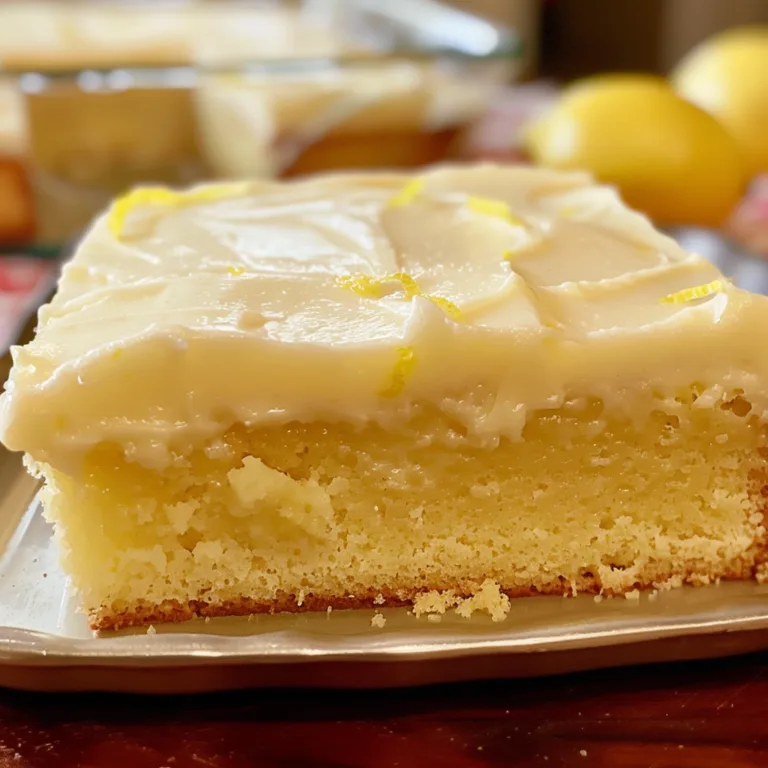
Lemon Sheet Cake with Lemon Frosting
A moist, tender single-layer cake bursting with bright citrus flavor, topped with a tangy lemon frosting. Perfect for feeding a crowd with its easy 9×13-inch pan size and vibrant, naturally zested lemon flavor.
- Total Time: 90
- Yield: 24 slices 1x
Ingredients
2 cups all-purpose flour
2 teaspoons baking powder
1/2 teaspoon baking soda
1/2 teaspoon salt
1/2 cup unsalted butter, softened
2 cups granulated sugar
2 large eggs, room temperature
1 cup sour cream
1/4 cup fresh lemon juice
1 tablespoon fresh lemon zest
2 1/2 cups powdered sugar
1/4 cup unsalted butter, softened
2 tablespoons fresh lemon juice
1 teaspoon fresh lemon zest
Instructions
Preheat oven to 350°F (175°C)
Line a 9×13-inch baking pan with parchment paper
In a medium bowl, whisk flour, baking powder, baking soda, and salt
In a large bowl, cream butter and sugar until light and fluffy
Beat in eggs one at a time, then stir in sour cream, lemon juice, and lemon zest
Gradually add dry ingredients to wet ingredients, mixing until just combined
Spread batter evenly in prepared pan
Bake 30 minutes, until golden and a toothpick inserted near center comes out clean
Cool completely in pan on wire rack
In a small bowl, beat powdered sugar, softened butter, lemon juice, and lemon zest until smooth
Spread frosting over cooled cake using an offset spatula
Notes
Use room-temperature butter and eggs for smooth batter
Cake flour yields a lighter texture
Store leftovers in an airtight container at room temperature up to 2 days
Freeze unfrosted cake for up to 3 months
- Prep Time: 30
- Cook Time: 30
- Category: No-Bake Creamy Desserts
- Method: Baking
- Cuisine: American
- Diet: Vegetarian
Nutrition
- Serving Size: 1 slice
- Calories: 250
- Sugar: 25g
- Sodium: 200mg
- Fat: 12g
- Saturated Fat: 7g
- Carbohydrates: 32g
- Fiber: 0.3g
- Protein: 3g
- Cholesterol: 40mg