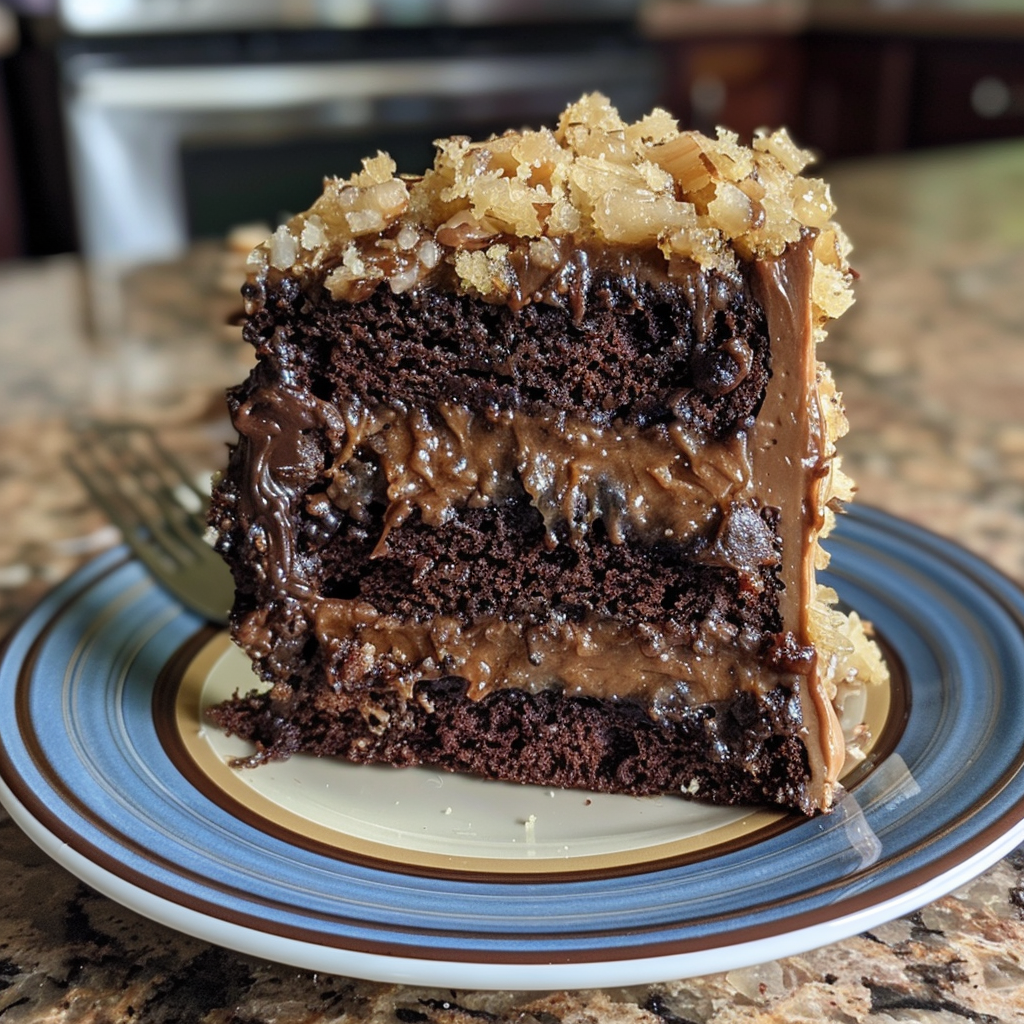
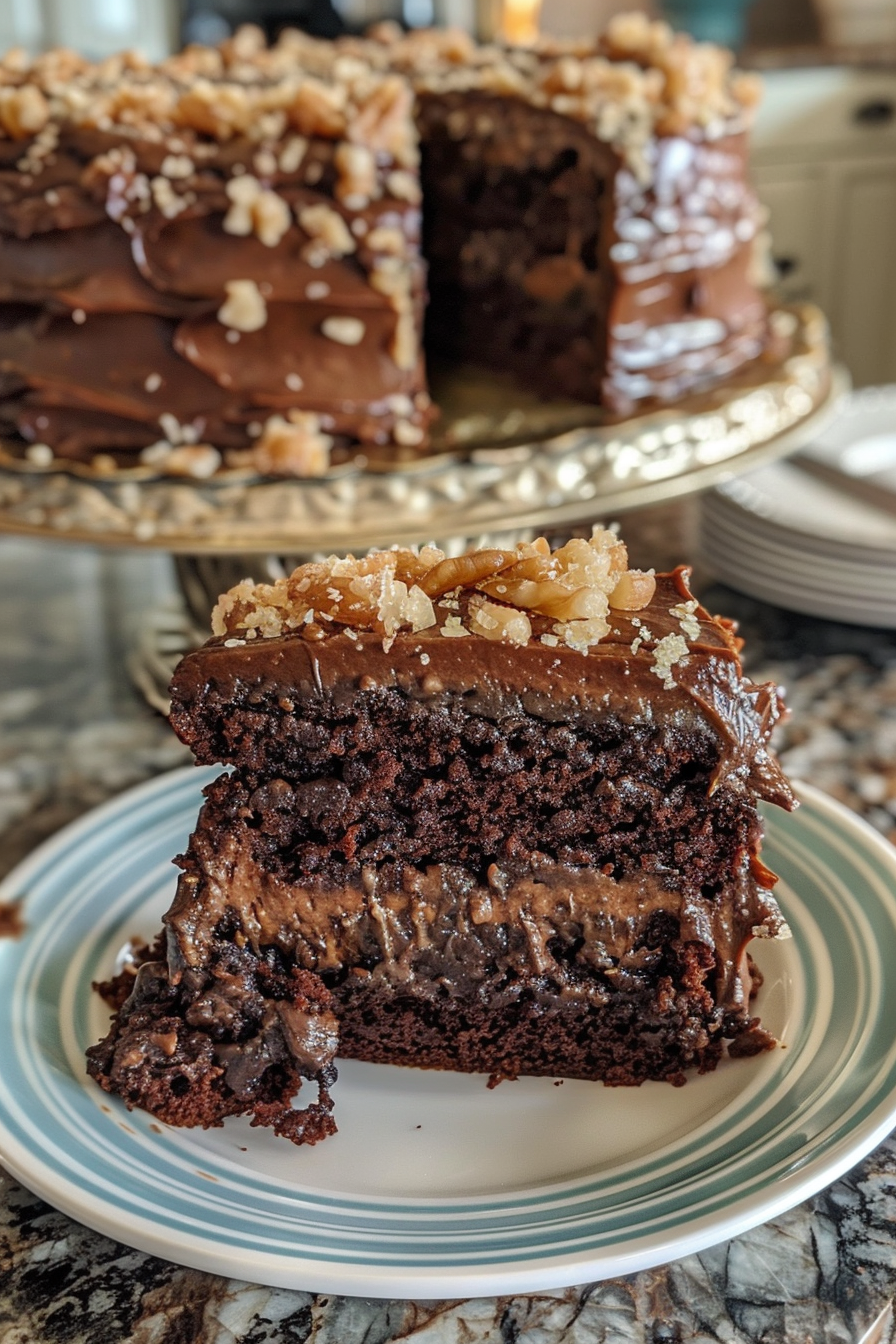
German Chocolate Cake is a rich, three-layer dessert built on sweet baking chocolate, tender buttermilk cake layers, and a signature coconut-pecan frosting that sets it apart from every other chocolate cake on the table. This recipe produces a bakery-quality result at home using straightforward techniques and easy-to-find ingredients. Every component, from the moist crumb to the caramel-like topping, works together to create a cake that belongs at birthdays, holidays, and weekend celebrations.
| Detail | Info |
|---|---|
| Prep Time | 45 minutes |
| Cook Time | 35 minutes |
| Total Time | 1 hour 20 minutes (plus cooling) |
| Servings | 12 slices |
| Difficulty | Intermediate |
| Cuisine | American |
Why This German Chocolate Cake Recipe Works
I have tested this recipe across dozens of batches, and the key difference between a forgettable chocolate cake and this one comes down to the type of chocolate. Sweet baking chocolate, not semi-sweet or dark, gives the cake layers a milder, almost caramel-edged chocolate flavor that pairs perfectly with the sweet coconut-pecan frosting. Using buttermilk instead of regular milk activates the baking soda properly and keeps the crumb tender and springy for days after baking.
The coconut-pecan frosting is cooked on the stovetop using evaporated milk, egg yolks, sugar, and butter until it thickens into a glossy, golden spread. I toast the pecans before folding them in, which adds a deeper, nuttier flavor that elevates the entire frosting. This step takes only four minutes but makes a noticeable difference in the final taste.
One technique I rely on every time is separating the eggs and folding beaten egg whites into the batter at the end. This keeps the cake light despite the richness of the chocolate and butter. The result is a cake that feels indulgent without being heavy, with a crumb that holds together cleanly when sliced.
Ingredients
This recipe uses classic pantry staples alongside a few key items that define the character of a proper German Chocolate Cake.
| Ingredient | Quantity | Notes and Alternatives |
|---|---|---|
| Sweet baking chocolate (such as Baker’s German’s Sweet Chocolate) | 4 oz (113g) | Do not substitute dark chocolate; it changes the flavor profile significantly |
| Boiling water | 1/2 cup (120ml) | Used to melt the chocolate smoothly |
| All-purpose flour | 2 1/4 cups (280g) | Spooned and leveled; cake flour produces a slightly more delicate crumb |
| Baking soda | 1 teaspoon | Essential for lift; do not substitute baking powder |
| Salt | 1/2 teaspoon | Fine sea salt preferred |
| Unsalted butter (softened) | 1 cup (226g) | Room temperature is critical; plant-based butter works for dairy-free |
| Granulated sugar | 2 cups (400g) | White sugar only for this recipe |
| Eggs (separated) | 4 large | Egg yolks go into batter; whites are beaten separately |
| Pure vanilla extract | 1 teaspoon | Use pure, not imitation, for best results |
| Buttermilk | 1 cup (240ml) | Mix 1 cup milk with 1 tablespoon lemon juice and let sit 5 minutes as a substitute |
| Evaporated milk | 1 cup (240ml) | For the frosting; full-fat coconut milk works as a dairy-free option |
| Granulated sugar (for frosting) | 1 cup (200g) | Brown sugar adds deeper caramel notes if preferred |
| Egg yolks (for frosting) | 3 large | Must be beaten before adding to hot mixture |
| Unsalted butter (for frosting) | 1/2 cup (113g) | Cut into cubes for even melting |
| Sweetened shredded coconut | 1 1/3 cups (120g) | Toasted coconut adds extra depth; unsweetened also works |
| Pecans (chopped) | 1 1/2 cups (170g) | Toast before using; walnuts are a reasonable substitute |
| Vanilla extract (for frosting) | 1 teaspoon | Same quality rules apply |
Step-by-Step Instructions
Follow these phases in order, and the entire German Chocolate Cake comes together with confidence and precision.
Phase 1: Prepare Your Equipment and Chocolate
- Preheat the oven to 350°F (175°C) and position a rack in the center of the oven.
- Grease three 9-inch round cake pans with butter, line the bottoms with parchment paper circles, then flour the sides lightly and tap out the excess.
- Chop the sweet baking chocolate into small pieces and place them in a heatproof bowl.
- Pour 1/2 cup of boiling water directly over the chocolate and stir until completely smooth and glossy, then set aside to cool to room temperature.
Phase 2: Toast the Pecans
- Spread the chopped pecans in a single layer on a dry skillet over medium heat.
- Toast the pecans for 3 to 4 minutes, stirring constantly, until fragrant and lightly golden, then remove from heat immediately and set aside.
Phase 3: Make the Cake Batter
- Whisk together the flour, baking soda, and salt in a medium bowl, then set aside.
- Beat the softened butter and sugar together in a large bowl using a stand mixer or hand mixer on medium-high speed for 4 to 5 minutes until very pale and fluffy.
- Add the 4 egg yolks one at a time, beating well after each addition and scraping down the bowl as needed.
- Mix in the vanilla extract and the cooled melted chocolate until fully incorporated.
- Reduce the mixer speed to low and add the flour mixture in three additions, alternating with the buttermilk in two additions, beginning and ending with the flour mixture.
- Beat the 4 egg whites in a clean bowl with clean beaters on medium-high speed until stiff peaks form.
- Fold one-third of the beaten egg whites into the batter using a rubber spatula to lighten it, then gently fold in the remaining whites until no streaks remain.
Phase 4: Bake the Cake Layers
- Divide the batter evenly among the three prepared pans, smoothing the tops with an offset spatula.
- Bake for 30 to 35 minutes until a toothpick inserted into the center comes out clean and the edges pull slightly away from the pan.
- Cool the cake layers in their pans on wire racks for 10 minutes, then run a thin knife around the edges and invert onto the racks to cool completely before frosting.
Phase 5: Make the Coconut-Pecan Frosting
- Whisk together the evaporated milk, sugar, beaten egg yolks, and cubed butter in a medium saucepan over medium heat.
- Cook the mixture, stirring constantly, for 10 to 12 minutes until it thickens noticeably, turns a light golden color, and coats the back of a spoon.
- Remove the saucepan from the heat and stir in the vanilla extract, toasted shredded coconut, and toasted pecans.
- Let the frosting cool at room temperature for 30 minutes, stirring occasionally, until it reaches a spreadable consistency.
Phase 6: Assemble the Cake
- Place the first cooled cake layer on a cake stand or serving plate and spread one-third of the coconut-pecan frosting evenly over the top.
- Place the second layer directly on top and spread another third of the frosting over it.
- Place the final cake layer on top and spread the remaining frosting across the top surface only, leaving the sides of the cake bare in the traditional style.
- Allow the assembled cake to rest for 15 minutes before slicing to let the frosting set.
Chef Tips for Perfect Results
These precision tips come directly from repeated testing and produce consistent, bakery-level results every time.
- Use room-temperature dairy: Cold butter and cold buttermilk do not incorporate properly. Pull everything out of the refrigerator at least 45 minutes before you begin mixing the batter.
- Weigh your flour: Scooping flour directly from the bag compacts it and leads to a dense cake. Spoon flour into the measuring cup and level it off, or better yet, use a kitchen scale for 280 grams exactly.
- Do not rush the frosting: The coconut-pecan frosting needs a full 10 to 12 minutes over medium heat to thicken correctly. Pulling it too early results in a runny topping that slides off the layers.
- Cool the layers completely: Frosting a warm cake causes the coconut-pecan topping to melt and pool. Give the layers a full hour on the wire rack before assembling.
- Fold, do not stir, the egg whites: Stirring deflates the air you just beat into the whites. Use a wide rubber spatula and a gentle folding motion from the bottom of the bowl upward.
- Level the cake layers if needed: Use a long serrated knife to trim any domed tops before assembling. This keeps the cake stable and the layers even when sliced.
Common Mistakes to Avoid
These are the most frequent problems home bakers encounter with German Chocolate Cake, along with clear solutions for each one.
- Using the wrong chocolate: Standard semi-sweet chocolate produces a darker, more bitter cake that overwhelms the delicate frosting. Always use sweet baking chocolate specifically labeled for this recipe, such as Baker’s German’s Sweet Chocolate, to maintain the correct flavor balance.
- Skipping the egg white separation step: Many bakers fold the whole eggs directly into the batter to save time. This shortcut produces a noticeably denser crumb because you lose the leavening action of beaten egg whites. Take the extra five minutes to separate and beat them.
- Overmixing after adding flour: Once the flour hits the wet ingredients, gluten begins developing rapidly. Mix only until the streaks of flour disappear, and then stop immediately to avoid a tough, chewy cake.
- Under-cooking the frosting: A frosting that has not cooked long enough remains thin and slides off the layers during assembly. The correct texture is thick enough that a spoon dragged through it leaves a trail that holds its shape for two to three seconds.
- Frosting a warm cake: Heat from the cake layers liquefies the frosting and causes it to soak into the crumb rather than sitting on top. Always wait until the layers are completely cool to the touch before you begin assembly.
Variations and Substitutions
This recipe adapts well to dietary needs and flavor preferences without sacrificing the identity of the original German Chocolate Cake.
| Ingredient | Substitution | Impact on Flavor |
|---|---|---|
| Buttermilk | 1 cup whole milk + 1 tablespoon lemon juice (rest 5 min) | Slightly less tangy but still tender crumb |
| Unsalted butter (cake) | Neutral-flavored plant-based butter (same quantity) | Very similar result; slightly less rich flavor |
| Evaporated milk (frosting) | Full-fat canned coconut milk | Adds a stronger coconut undertone; slightly sweeter |
| Pecans | Toasted walnuts or macadamia nuts | Walnuts add bitterness; macadamia adds creaminess |
| Sweetened shredded coconut | Unsweetened shredded coconut + 2 tbsp extra sugar | Same texture; slightly less sweet overall |
| All-purpose flour | Cake flour (same weight) | More delicate, slightly softer crumb texture |
| Sweet baking chocolate | 3.5 oz semi-sweet chocolate + 1.5 tbsp granulated sugar | Acceptable substitute; slightly more bitter notes |
Serving Suggestions and Pairings
German Chocolate Cake shines on its own, but the right accompaniments make each occasion feel complete.
- Classic family celebration: Serve chilled slices with a scoop of vanilla bean ice cream alongside. The cold creaminess balances the rich, sweet frosting perfectly.
- Birthday party: Plate individual slices with a drizzle of warm caramel sauce and a fresh raspberry on the side for a restaurant-quality presentation at home.
- Holiday dinner table: Pair the cake with strong black coffee or a spiced chai latte. The bitterness of the coffee cuts through the sweetness of the coconut-pecan frosting beautifully.
- Afternoon tea spread: Serve thinner slices alongside a pot of Earl Grey tea and a small bowl of lightly whipped cream for dipping. This presentation works well for brunch gatherings too.
- Potluck or bake sale: Transport the cake in an airtight container and serve at room temperature. The frosting holds its texture well and does not require refrigeration for serving periods up to three hours.
Storage and Reheating
Proper storage keeps German Chocolate Cake moist and flavorful for several days after baking.
| Method | Duration | Instructions |
|---|---|---|
| Room temperature (covered) | Up to 2 days | Cover the entire cake with a cake dome or wrap individual slices in plastic wrap. Keep away from direct sunlight and heat sources. |
| Refrigerator | Up to 5 days | Wrap the whole cake or individual slices tightly in plastic wrap, then store in an airtight container. Allow to come to room temperature for 20 minutes before serving for best texture. |
| Freezer (unfrosted layers) | Up to 3 months | Wrap each cooled cake layer tightly in two layers of plastic wrap, then in aluminum foil. Thaw overnight in the refrigerator before frosting and assembling. |
| Freezer (assembled slices) | Up to 2 months | Freeze individual slices on a parchment-lined tray until solid, then wrap each in plastic wrap and place in a freezer bag. Thaw in the refrigerator overnight. |
| Reheating a single slice | N/A | Microwave an unwrapped slice on 30% power for 20 to 30 seconds to gently warm. Do not overheat or the frosting will liquefy. |
Nutritional Information
Approximate values per serving (1 slice, based on 12 servings). Calculated using standard ingredients as listed.
| Nutrient | Amount per Serving |
|---|---|
| Calories | 620 kcal |
| Total Fat | 34g |
| Saturated Fat | 17g |
| Cholesterol | 145mg |
| Sodium | 290mg |
| Total Carbohydrates | 75g |
| Dietary Fiber | 3g |
| Total Sugars | 55g |
| Protein | 7g |
| Calcium | 90mg |
| Iron | 2.5mg |
Frequently Asked Questions
Can I make German Chocolate Cake without buttermilk?
Yes, you can make a reliable buttermilk substitute by combining one cup of whole milk with one tablespoon of fresh lemon juice or white vinegar, then letting the mixture rest for five minutes until it curdles slightly. This homemade version activates the baking soda the same way that store-bought buttermilk does. The final cake texture will be nearly identical, with only a marginally less tangy flavor in the crumb. For a dairy-free option, use full-fat canned coconut milk with the same amount of lemon juice.
How do I know when the cake layers are fully baked?
Insert a toothpick or thin cake tester into the center of each layer at the 30-minute mark. The toothpick should come out completely clean or with just one or two moist crumbs attached; wet batter clinging to the toothpick means the cake needs more time. Additionally, the edges of the cake will begin to pull away from the sides of the pan visibly, and the center will spring back gently when pressed with a fingertip. Overbaked layers dry out quickly, so check at 30 minutes and add time in 2-minute increments from there.
Why is my coconut-pecan frosting too runny?
A runny frosting almost always means it was not cooked long enough on the stovetop. The mixture must reach a temperature of approximately 170°F (77°C) and thicken enough to coat the back of a spoon before you remove it from the heat. If your frosting is already off the heat and still too thin, return it to medium-low heat and continue stirring for an additional 3 to 5 minutes. Cooling the frosting for the full 30 minutes at room temperature is also essential before you attempt to spread it.
Can I make German Chocolate Cake ahead of time?
Absolutely, and making it one day ahead actually improves the texture and flavor as everything settles together. Bake and cool the cake layers, wrap them individually in plastic wrap, and store them at room temperature overnight. Make the coconut-pecan frosting the next day, cool it fully, then assemble and frost the cake. Alternatively, assemble the fully frosted cake, cover it with a cake dome, and refrigerate it overnight, bringing it to room temperature for 20 minutes before serving.
How do I serve German Chocolate Cake at a large gathering?
For gatherings of more than 12 people, bake a double batch of batter in two sets of pans and stack the cake into six layers with frosting between each. A single batch cut into 16 smaller slices also works well for buffet-style service without the extra baking. Use a long, thin knife dipped in hot water and wiped clean between each cut to produce clean, bakery-style slices through the sticky coconut-pecan frosting. Serve the cake at room temperature rather than chilled for the best flavor and texture presentation.
Conclusion
German Chocolate Cake stands apart from other chocolate layer cakes because of the irreplaceable combination of sweet baking chocolate and the deeply flavored coconut-pecan frosting. Every step in this recipe, from beating the egg whites separately to toasting the pecans before folding them in, serves a specific purpose in building that signature flavor and texture. Follow the instructions carefully, use quality ingredients, and you will have a cake worth celebrating. That first bite of tender chocolate crumb with the chewy, golden frosting is exactly what makes this recipe worth baking again and again.
For more classic American layer cake recipes, explore our classic layer cake collection, our guide to homemade frosting techniques, and our roundup of best chocolate desserts. For background on the history of this recipe, visit the Food Network’s history of German Chocolate Cake, and for chocolate baking science, see Serious Eats’ chocolate baking guide.
Print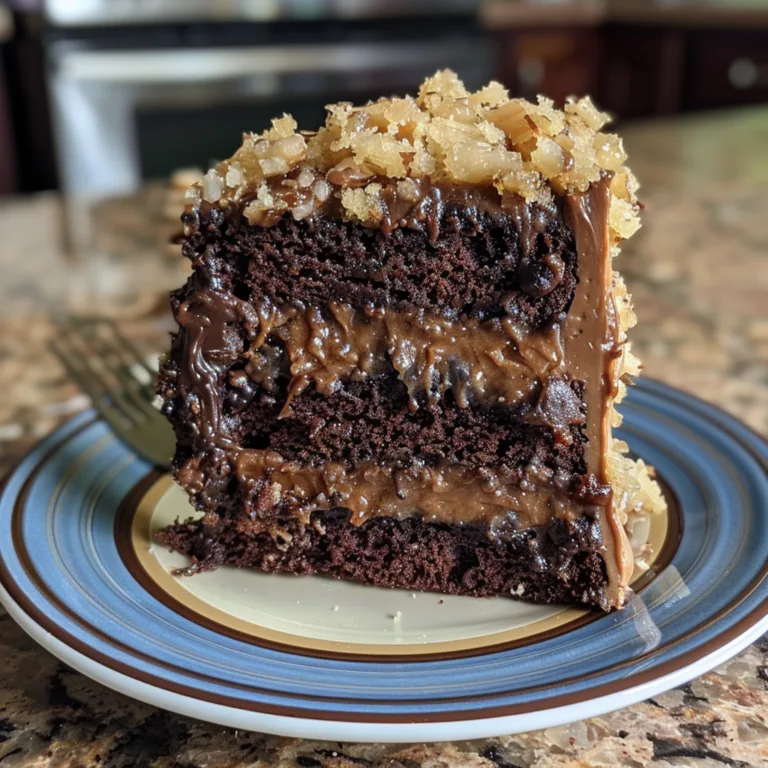
German Chocolate Cake: The Classic Layered Recipe
A three-layer chocolate cake with buttermilk-rich crumb and sweet coconut-pecan frosting. Tender, moist, and indulgent with a caramel-like flavor that pairs perfectly with celebrations.
- Total Time: 80
- Yield: 12 slices 1x
Ingredients
Sweet baking chocolate (such as Baker’s German’s Sweet Chocolate)
1/2 cup boiling water
2 1/4 cups all-purpose flour
1 1/2 teaspoons baking soda
1 cup buttermilk
2 cups granulated sugar
1/4 teaspoon salt
3 large eggs (2 for cake, 1 yolk for frosting)
3 tablespoons unsalted butter, melted
1 1/2 cups evaporated milk
2 large egg yolks (toasted pecans recommended)
1/3 cup chopped roasted pecans (toasted)
1 1/2 cups flaked sweetened coconut
1 1/2 teaspoons vanilla extract
Instructions
Preheat oven to 350°F (175°C). Grease and flour 3 (8-inch) round cake pans
Melt 4 oz sweet baking chocolate in boiling water, let cool slightly
In a bowl, whisk flour, baking soda, and buttermilk
Add sugar, salt, whole eggs, and melted butter. Beat until well combined
Gently fold in cooled chocolate (approx. 220°F) and vanilla
Divide batter into prepared pans. Bake 25–30 min until cake springs back when touched
Meanwhile, combine evaporated milk, sugar, egg yolks, and butter in a saucepan. Cook over medium heat 4–6 mins until thick (do not boil)
Off heat, stir in toasted pecans, coconut, and vanilla
Cool frosting to thick consistency, then spread between cooled cake layers and on top
Notes
Do not substitute dark chocolate; it alters flavor significantly
Toast pecans in oven 4 mins for enhanced flavor and texture
Cake flour can be used for more delicate crumb
Store in cool place, not refrigerator, for 1–2 days
- Prep Time: 45
- Cook Time: 35
- Category: Cake Recipes & Easy Baking Ideas
- Method: Baking
- Cuisine: American
- Diet: Vegetarian
Nutrition
- Serving Size: 1 slice
- Calories: 450
- Sugar: 55g
- Sodium: 350mg
- Fat: 22g
- Saturated Fat: 12g
- Carbohydrates: 60g
- Fiber: 2g
- Protein: 5g
- Cholesterol: 75mg